How to Practice Speaking When You Have No Conversation Partner
One of the most common frustrations for language learners is the feeling of being "stuck." You might spend hours memorizing vocabulary lists or perfecting your grammar, but when it comes time to actually say something, the words won't come out. The reason is simple: speaking is a physical and psychological skill that requires active muscle memory and real-time processing.
But what happens if you don't have a native speaker living next door? What if you are too shy to join a local meetup, or your schedule doesn't align with expensive tutors? The good news is that you don't need another person to start developing fluency.
In this guide, we will explore the most effective solo strategies to bridge the gap between knowing a language and speaking it fluently. We will also look at how modern technology, like the AI-powered tools at Hamzaban, is changing the game for independent learners.
The Psychology of Speaking Alone
Before diving into the techniques, it is important to understand why practicing alone works. Speaking is a motor skill. Your tongue, lips, and vocal cords need to learn how to produce foreign sounds automatically.
When you practice alone, you remove the "performance anxiety" that often hinders progress. There is no fear of judgment, which allows you to experiment with sounds and sentence structures freely. This builds the foundational confidence you need before you eventually step into a real-world conversation.
1. The Shadowing Technique
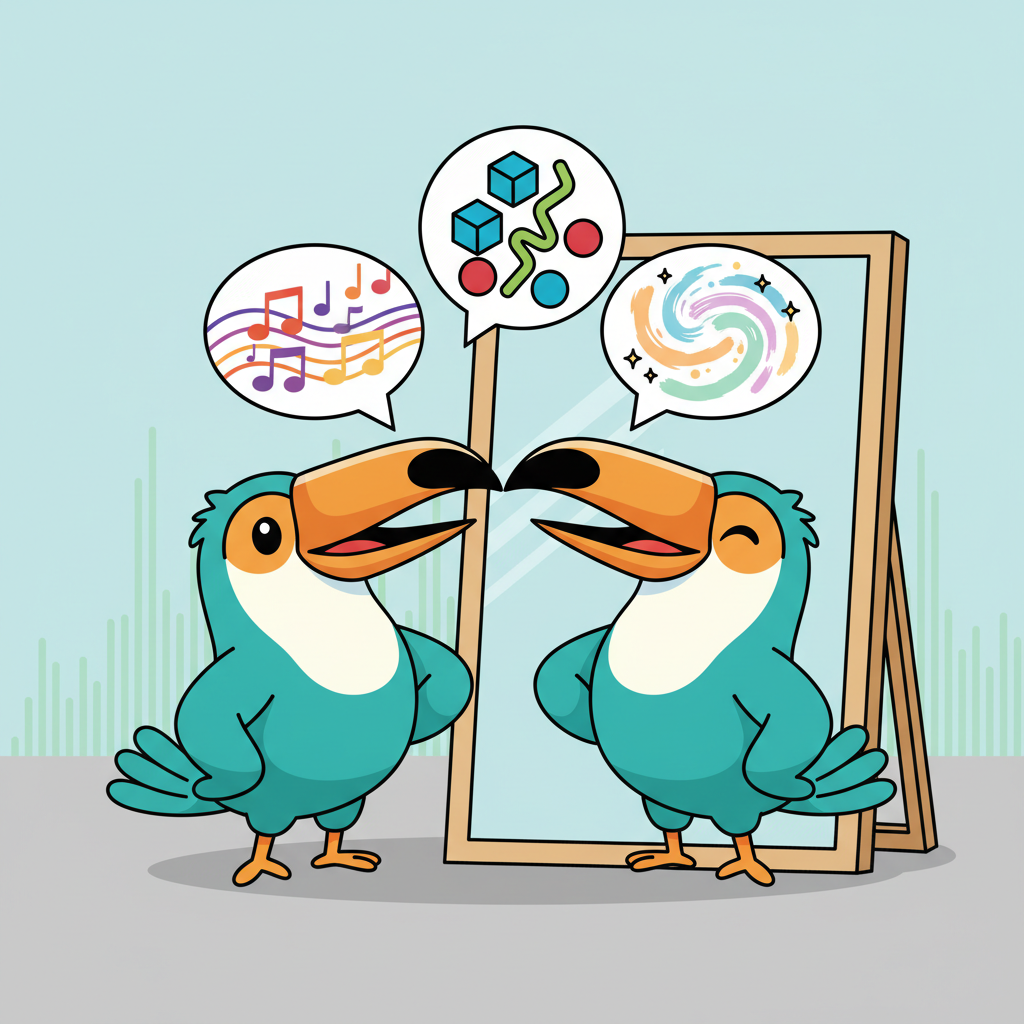
Shadowing is perhaps the most powerful tool for improving pronunciation and intonation. It involves listening to a native speaker and repeating what they say as quickly as possible—literally "shadowing" their voice.
To do this effectively:
- Choose a short audio clip: Use a podcast, a news segment, or a video that has a transcript.
- Listen first: Understand the context and the rhythm of the speech.
- Mimic the melody: Don't just focus on the words; focus on the stress, the pauses, and the emotional tone.
- Record yourself: Compare your recording to the original. This helps you identify specific phonemes or sounds that you are missing. For targeted feedback, see how AI pronunciation tools can help.
2. Narrating Your Life (Self-Talk)
This might feel strange at first, but talking to yourself is a highly effective way to build "functional fluency." The goal is to describe your daily actions and thoughts in your target language.
For example, if you are making coffee, say: "Now I am boiling the water. I need to find my favorite mug. Where did I put the spoons?"
Why this works:
- Identifies vocabulary gaps: You quickly realize which everyday words you don't know (e.g., "spatula" or "cluttered").
- Builds sentence speed: It forces you to construct sentences without the luxury of a long pause.
- Internalizes grammar: You practice tenses (past, present, future) in a natural context.
3. The Record-and-Review Method
Most learners hate the sound of their own voice, but recording yourself is the fastest way to improve. Pick a prompt—like "What did I do today?" or "What is my opinion on climate change?"—and speak for two minutes.
When you listen back, don't just cringe. Be analytical. Ask yourself:
- Did I hesitate too much before using a verb?
- Did I use the same three adjectives over and over?
- Was my pronunciation of specific vowels accurate?
You can use the Hamzaban grammar handbook to check if the structures you used in your recording were correct, allowing you to self-correct and try again.
4. Using AI Tutors for Low-Pressure Practice
Until recently, the biggest downside of solo practice was the lack of feedback. You could talk to your mirror, but the mirror couldn't tell you if your grammar was wrong or suggest a better word.
This is where AI tutoring has revolutionized language learning. With an AI conversation partner, you get the benefits of interactivity, spontaneity, and feedback—without the scheduling headaches or the social pressure.
At Hamzaban, the AI-powered tutor is designed to act as a supportive partner. It listens to your input, understands your meaning, and responds naturally. More importantly, it can identify the specific gaps in your speaking and provide personalized exercises to help you overcome them.
5. Thinking in the Target Language
Fluency is often defined as the ability to speak without translating in your head. To achieve this, you must practice "thinking" in the language.
Start small. Whenever you have a "micro-thought" (like "It's cold today" or "I'm hungry"), try to think it in your target language first. Over time, these small thoughts will grow into more complex internal monologues. This reduces the mental friction that occurs when you eventually have to speak to another person.
6. The "Missing Word" Strategy
While practicing alone, you will inevitably hit a wall where you don't know a word. Instead of stopping and reaching for a dictionary immediately, try to describe the word using the vocabulary you do have.
If you forget the word for "refrigerator," call it "the cold box in the kitchen where the food stays fresh." This is called circumlocution, and it is a vital skill for real-world fluency. It ensures that even if you forget a word during a real conversation, the flow of the talk won't stop.
7. Reading Aloud with Intention
Reading a book or an article silently is great for comprehension, but reading it aloud is a workout for your mouth.
When you read aloud, you are training your brain to recognize patterns and your muscles to execute them. Focus on the punctuation. Commas and periods are cues for breathing and intonation. Try to read with the same emotion you would use if you were telling a story to a friend.
Conclusion: Consistency Over Intensity
You don't need a three-hour intensive session once a week to become fluent. You need fifteen minutes of active speaking practice every single day. Whether you are shadowing a podcast, narrating your breakfast, or chatting with an AI tutor on Hamzaban, the key is the frequency of the "output."
By incorporating these solo strategies into your routine, you will find that when the time finally comes to speak with a native speaker, you won't just be ready—you'll be confident.
Ready to take your speaking skills to the next level? Start practicing with Hamzaban today and experience how personalized AI tutoring can accelerate your path to fluency.