
Free Online English Placement Test: Find Your CEFR Level
Knowing your current level is the most important step in any language learning journey. Without a clear starting point, you risk wasting time on materials that are either too easy or frustratingly difficult.
In this guide, we will explore why the Common European Framework of Reference for Languages (CEFR) is the gold standard for measuring proficiency. We will also show you how to take a free, AI-powered assessment to find your exact level and start a personalized learning path.
Why Your Current Level Matters
Many learners jump straight into studying without a plan. They might pick up a random textbook or watch movies without subtitles, only to find they aren't making progress. This usually happens because the content doesn't match their "Zone of Proximal Development."
If you study content that is too easy, you get bored. If it is too hard, you get overwhelmed. Finding your CEFR level allows you to select resources that provide just the right amount of challenge to keep you growing.
Understanding the CEFR Levels
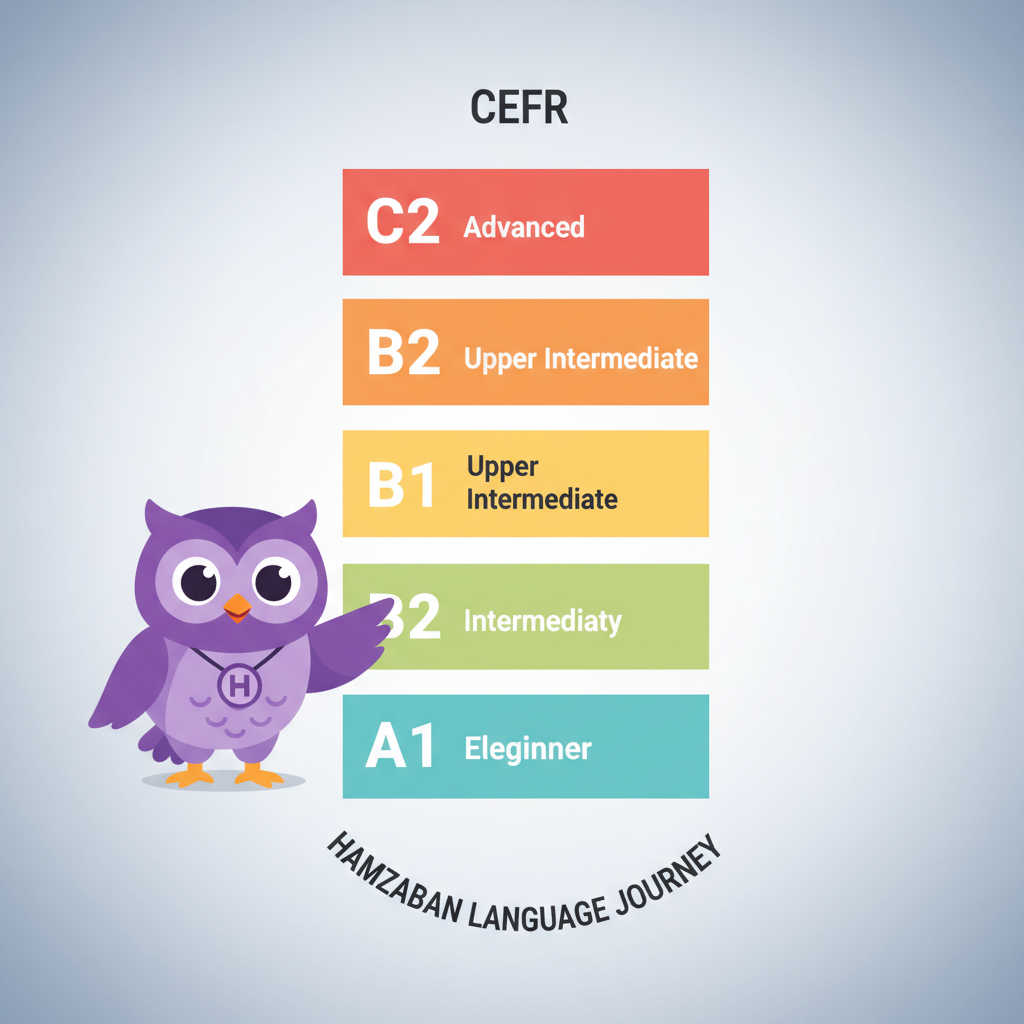
The CEFR scale is divided into three broad categories, each with two sub-levels. For a deeper dive, see our complete guide to understanding CEFR levels. Here is a quick overview to help you set realistic goals for your English studies.
A1 and A2: The Basic User
- A1 (Beginner): You can understand and use very basic everyday expressions. You can introduce yourself and ask simple questions about personal details.
- A2 (Elementary): You can communicate in simple and routine tasks. You can describe aspects of your background and immediate environment in simple terms.
B1 and B2: The Independent User
- B1 (Intermediate): You can deal with most situations likely to arise while traveling. You can produce simple connected text on topics that are familiar or of personal interest.
- B2 (Upper Intermediate): You can understand the main ideas of complex text. You can interact with a degree of fluency and spontaneity that makes regular interaction with native speakers quite possible.
C1 and C2: The Proficient User
- C1 (Advanced): You can express ideas fluently and spontaneously without much obvious searching for expressions. You can use language flexibly for social, academic, and professional purposes.
- C2 (Proficiency): You can understand with ease virtually everything heard or read. You can summarize information from different spoken and written sources.
The Problem with Traditional Placement Tests
Most traditional online tests are static. They give everyone the same 20 multiple-choice questions about grammar. While these can give a rough estimate, they often miss the nuances of your speaking and listening abilities.
Traditional tests fail to account for "spiky profiles." You might have C1-level reading skills but B1-level speaking skills. A truly effective placement test should adapt to your performance in real-time.
How AI is Changing Language Assessment
With the rise of artificial intelligence, placement tests have become much smarter. AI-powered tools can now analyze your sentence structure, vocabulary range, and even your pronunciation to give a more holistic view of your skills.
Using platforms like Hamzaban, you can experience a diagnostic approach that identifies specific gaps in your knowledge. Instead of just giving you a letter and a number, modern tools show you exactly which grammar rules or vocabulary sets you need to master next.

How to Prepare for Your English Placement Test
While you shouldn't "study" for a placement test (because you want an honest result), there are ways to ensure your performance accurately reflects your current ability:
- Find a Quiet Environment: Distractions can lead to silly mistakes that don't reflect your true knowledge.
- Check Your Equipment: If the test includes listening or speaking portions, ensure your headphones and microphone are working.
- Don't Use Translators: It might be tempting to look up a word, but this will give you an artificially high score, leading to learning materials that are too difficult for you later.
- Stay Relaxed: Remember, this isn't a final exam. It is a tool designed to help you learn more efficiently.
What to Do After You Get Your Results
Once you have your CEFR level, it's time to take action. A level is just a snapshot in time; what matters is how you use that information to move forward.
1. Set a Target Level
If you are currently at A2, your next goal should be B1. Don't try to jump to C1 immediately. Break your journey into manageable milestones.
2. Focus on Your Weaknesses
If your test results show that your "Past Simple" tense is weak but your vocabulary is strong, use our English grammar roadmap from beginner to advanced and spend your next few study sessions focusing specifically on verb conjugations.
3. Use Adaptive Tools
Modern learning shouldn't be one-size-fits-all. Try Hamzaban free to access personalized exercises that adapt to your specific level. By focusing on the gaps identified in your assessment, you can reach your goals much faster than using a generic textbook.
The Benefits of Regular Re-Assessment
You shouldn't just take a placement test once. We recommend taking a progress check every 3 to 6 months. Seeing your level move from B1 to B2 is an incredible motivator and proves that your hard work is paying off.
Regular testing also ensures that your study material stays relevant. As you improve, your AI tutor or learning platform should automatically increase the complexity of the content it provides.
Take Your Free Test Today
Ready to find out where you stand? Knowing your level is the first step toward fluency. By using an AI-driven approach, you can skip the guesswork and start practicing what actually matters.
Head over to the Hamzaban web app to explore how personalized practice and intelligent assessment can transform your English learning experience. Whether you are a complete beginner or an advanced learner looking to polish your skills, our platform is designed to meet you exactly where you are.
Conclusion
A CEFR level is more than just a label—it's a roadmap. By taking a free online placement test, you gain the clarity needed to study smarter, not harder. Start your journey today and watch how quickly you can progress when the path is designed specifically for you.