

English Grammar from Beginner to Advanced: The Complete Roadmap
Mastering English grammar can feel like navigating a vast, endless ocean. Without a map, you might find yourself drifting between complex verb tenses and confusing prepositions without a clear sense of progress.
This guide provides a structured roadmap from the very basics of A1 to the nuanced mastery of C2. Whether you are just starting or looking to polish your advanced skills, understanding where you are in this journey is the first step toward fluency.
The Beginner Phase (A1 - A2): Building the Foundation
At the beginner level, grammar is about survival and basic communication. You don't need to know every exception to the rule; you just need enough structure to build simple, functional sentences.
A1: The Absolute Basics
At this stage, your focus should be on the 'building blocks' of the English language. You need to identify who is doing what and when.
- The Verb 'To Be': The most essential verb in English. Master am, is, are and their past forms was, were. You can start with Personal Pronouns and the Verb 'To Be' in the grammar handbook.
- Subject Pronouns: Understanding I, you, he, she, it, we, they.
- Present Simple: Used for facts and daily routines (e.g., "I drink coffee every morning").
- Basic Articles: Learning when to use a, an, and the.

A2: Expanding Your Range
Once you can introduce yourself, you need to start describing your past and your plans. This is where grammar starts to feel more like a real conversation.
- Past Simple: Regular and irregular verbs (e.g., "I walked" vs. "I went").
- Present Continuous: Describing actions happening right now.
- Comparative and Superlative Adjectives: Learning how to say something is "better" or "the best."
- Future with 'Going to': Expressing intentions and immediate plans.
The Intermediate Phase (B1 - B2): Bridging the Gap
The intermediate phase is often called the "plateau," but with the right strategies for overcoming the language learning plateau, it is actually where the most exciting growth happens. This is where you move from simple sentences to complex ideas.
B1: Developing Independence
At B1, you start to connect your thoughts. You are no longer just listing facts; you are explaining reasons and results.
- Present Perfect: One of the most challenging tenses for learners. It connects the past to the present (e.g., "I have lived here for three years").
- Modals of Possibility and Ability: Using can, could, may, might, should, must.
- First and Second Conditionals: Talking about real and imaginary situations.
- Relative Clauses: Using who, which, that to provide more detail without starting a new sentence.
B2: Achieving Fluency
B2 is the level required for most professional and academic environments. Your grammar should now allow you to express nuance and emphasize specific points.
- The Passive Voice: Shifting focus from the doer to the action (e.g., "The bridge was built in 1920").
- Past Perfect: Distinguishing between two different points in the past.
- Reported Speech: Learning how to tell someone what another person said.
- Gerunds vs. Infinitives: Knowing when to use "doing" versus "to do."
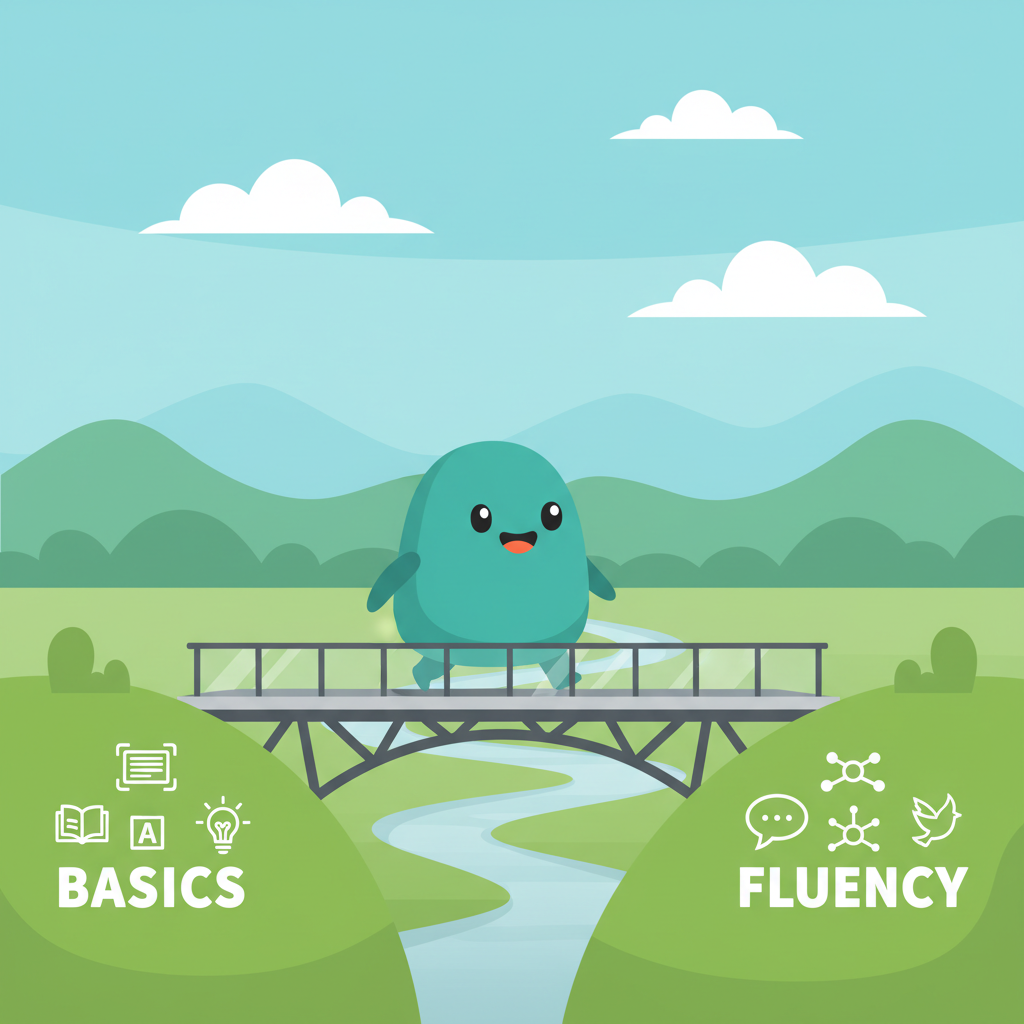
If you find these intermediate structures confusing, don't worry. You can practice these specific patterns using the interactive exercises on Hamzaban. The platform identifies your specific weak points and gives you targeted practice to overcome the B2 plateau.
The Advanced Phase (C1 - C2): Native-Like Precision
Advanced grammar isn't just about being "correct." It is about choosing the specific structure that conveys the exact tone, formality, and emphasis you desire.
C1: Professional Proficiency
At this level, you should be able to manipulate the language to sound more sophisticated and persuasive.
- Inversion for Emphasis: Using structures like "Never have I seen..." instead of "I have never seen..."
- Mixed Conditionals: Combining different time frames (e.g., "If I had studied harder, I would be a doctor now").
- Advanced Passive Structures: Using "It is said that..." or "He is thought to be..."
- Subjunctive Mood: Expressing wishes, demands, or suggestions (e.g., "I suggest that he arrive on time").
C2: Mastery and Nuance
C2 is about the fine details. It involves understanding rare idioms, archaic structures, and the subtle differences between similar grammatical choices.
- Cleft Sentences: Using structures like "What I need is a holiday" to add focus.
- Future in the Past: Describing things that were planned but may or may not have happened.
- Ellipsis and Substitution: Leaving out words that are understood from context to sound more natural.
How to Study Grammar Effectively
Knowing the roadmap is one thing; walking it is another. Here are three practical tips to help you move through these levels faster:
-
Don't Memorize Rules, Recognize Patterns: Instead of memorizing a table of tenses, read and listen to as much English as possible. When you see a structure you've studied, highlight it. This builds "language intuition."
-
Produce, Don't Just Consume: You can't learn to drive by watching someone else. You must write and speak. Try to use a new grammar point at least five times in a conversation or a journal entry the day you learn it.
-
Use AI for Personalized Feedback: Traditional textbooks can't tell you why your specific sentence sounds "off." Try Hamzaban free to get instant, personalized feedback from an AI tutor that understands your native language's influence on your English grammar.
Conclusion
Grammar is the skeleton of language. While vocabulary provides the meat and skin, grammar gives your communication shape and strength. By following this roadmap, you can stop feeling overwhelmed and start making measurable progress.
Remember, even native speakers make mistakes. The goal isn't perfection—it's clarity and connection. Start where you are, master the next level on the map, and keep moving forward.
Ready to see where you stand? Explore the grammar handbook and interactive tools at hamzaban.xyz to accelerate your journey to fluency today.