
How to Learn a Language with AI: The Ultimate Guide
The landscape of language learning has changed forever. Gone are the days when you had to rely solely on dusty textbooks or expensive private tutors to reach fluency. Today, Artificial Intelligence is democratizing education, making personalized, high-quality instruction available to anyone with an internet connection.
But with so many tools available, how do you actually use AI to learn a language effectively? In this guide, we will explore the strategies, tools, and habits you need to master a new tongue in the digital age.
Why AI is a Game-Changer for Language Learners
Traditional methods often suffer from a 'one size fits all' approach. A classroom moves at the pace of the average student, and a textbook can’t answer a specific question about a niche grammar rule. AI solves these problems by providing an adaptive experience.
AI doesn't get tired, it doesn't judge your pronunciation, and it is available 24/7. Whether you are practicing at 3:00 AM or during your lunch break, an AI tutor is ready to help you bridge the gap between 'studying' a language and actually 'speaking' it.

Finding Your Path: The Core Pillars of AI Learning
To build a complete study routine, you need to address four key areas: input, output, grammar, and consistency. AI can assist in every single one of these pillars.
1. Interactive Conversation Practice
One of the biggest hurdles for learners is the 'fear of speaking.' AI conversation practice partners provide a low-pressure environment to practice. You can stumble, make mistakes, and take your time without feeling embarrassed.
Tools like the Hamzaban AI tutor allow you to engage in natural dialogues. These systems can provide instant feedback on your word choice and help you sound more like a native speaker through context-aware corrections.
2. Personalized Grammar and Vocabulary
Instead of memorizing lists of words you might never use, AI allows for 'just-in-time' learning. If you are interested in cooking, you can ask an AI to generate a lesson specifically about culinary vocabulary.
Modern platforms use Spaced Repetition Systems (SRS) powered by algorithms to track which words you are struggling with. They show you those specific words just as you are about to forget them, ensuring maximum retention with minimum effort.
3. Instant Feedback Loops
In a traditional setting, you might write an essay and wait a week for a teacher to grade it. By then, you've forgotten why you made those mistakes. AI provides instant gratification. When you write a sentence, the AI can immediately highlight a misplaced verb and explain the rule behind it.
Building an Effective AI Study Routine
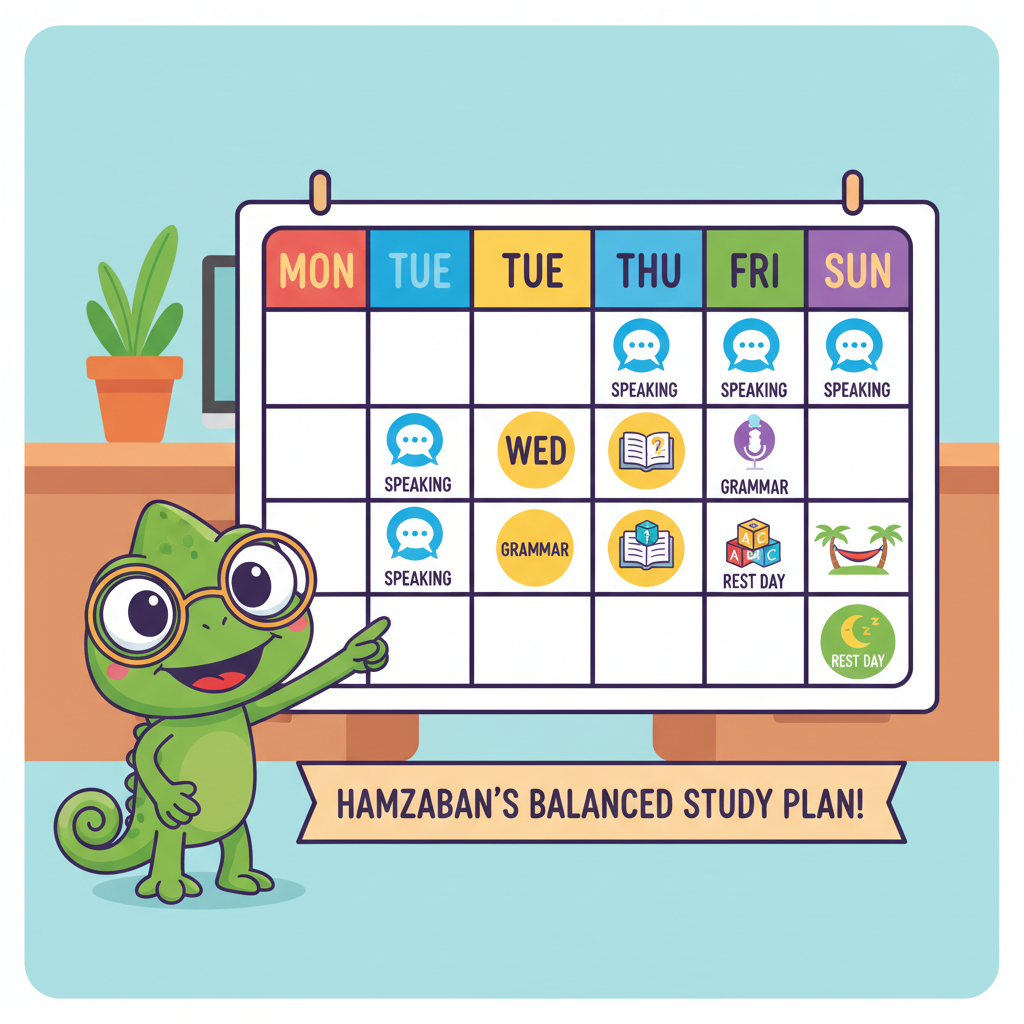
Having the tools is only half the battle; you need a system. Here is how to structure your week for maximum progress:
- The 15-Minute Daily Sprint: Use an AI app for quick vocabulary drills or grammar exercises. Building a daily language habit is more important than intensity.
- The Deep Dive (2x Weekly): Spend 30 minutes in a simulated conversation. Pick a topic, such as 'ordering at a restaurant' or 'discussing a hobby,' and stick to it.
- The Feedback Review: Once a week, look back at the corrections the AI gave you. Note down recurring patterns in your mistakes.
Advanced Strategies: Prompt Engineering for Learners
If you are using general AI models alongside specialized tools, you can use specific prompts to accelerate your learning. Instead of asking 'How do I say X?', try these more complex requests:
- "Explain the difference between these two synonyms in a casual vs. formal context."
- "Write a short story using these five vocabulary words, then ask me three comprehension questions about it."
- "Act as a job interviewer in Berlin. Conduct a 5-minute interview with me in German and correct my grammar at the end."
Overcoming the Limitations of AI
While AI is powerful, it isn't magic. It can occasionally 'hallucinate' or provide overly formal translations. To counter this, always use a dedicated language learning platform like Hamzaban which is specifically tuned for linguistic accuracy rather than just general text generation.
Remember that language is ultimately a human connection. Use AI to build your skills, but don't forget to eventually test those skills in the real world. AI is the training ground; the world is the stadium.
Conclusion: Your Journey Starts Today
The barrier to entry for learning a new language has never been lower. By combining the power of AI with a disciplined routine, you can achieve in months what used to take years. You don't need to move to a different country to immerse yourself; you just need the right digital ecosystem.
Ready to see how personalized AI can transform your progress? Try Hamzaban free and start your first adaptive lesson today. Whether you are mastering Persian, English, or any other language, our AI is ready to guide you every step of the way.
Summary Checklist for AI Learning:
- Choose an AI tool that offers personalized feedback.
- Commit to at least 10-15 minutes of daily practice.
- Focus on 'Active Production' (speaking/writing) rather than just 'Passive Consumption.'
- Use AI to simulate real-world scenarios you actually care about.
- Track your progress and celebrate the small wins!