Personal Pronouns & 'Sein' / 'Haben'
Learn basic pronouns and the verbs to be and to have.
Complete German Grammar Handbook
Welcome to Your First German Grammar Lesson!
Welcome to your very first step in mastering German grammar! If you imagine learning a language like building a house, vocabulary provides the bricks, but grammar is the mortar that holds everything together. Without it, you just have a pile of disconnected words.
In this foundational lesson, we are going to look at the absolute core of the German language: Personal Pronouns (the words for I, you, he, she, we, they) and the two most important verbs in the entire language: sein (to be) and haben (to have).
By the end of this lesson, you will be able to introduce yourself, describe your feelings, state your age, talk about what you own, and address other people correctly. Let's dive in!
Part 1: Personal Pronouns
What is a Personal Pronoun?
A pronoun is simply a word that stands in for a noun. Instead of saying "Maria is reading a book because Maria loves reading," we use a pronoun to say "Maria is reading a book because she loves reading."
Personal pronouns specifically represent the "actors" or "subjects" in our sentences—the people, animals, or things doing the action.
Before we look at the German words, let's quickly understand the concept of Grammatical Person, as it will make learning verb endings much easier later on:
- 1st Person: The speaker (I, We)
- 2nd Person: The person being spoken to (You, You all)
- 3rd Person: The person or thing being spoken about (He, She, It, They)
The German Personal Pronouns
Here is the complete list of German personal pronouns in the subject position (what grammarians call the Nominative case):
| Person | Singular (One Person/Thing) | Plural (Multiple People/Things) |
|---|---|---|
| 1st Person | ich (I) | wir (we) |
| 2nd Person | du (you - informal) | ihr (you all - informal) |
| 3rd Person | er (he)<br>sie (she)<br>es (it) | sie (they) |
| Formal | Sie (You - formal singular) | Sie (You - formal plural) |
Breaking Down the Pronouns
Let's take a closer look at how these pronouns work in practice, as German has a few unique quirks compared to English.
1. The First Person: ich and wir
ich means "I". Unlike in English, where "I" is always capitalized, in German, ich is only capitalized at the beginning of a sentence.
wir means "we" and is used exactly like its English counterpart.
2. The Third Person: er, sie, es
In English, we use "he" for men, "she" for women, and "it" for objects. In German, nouns have grammatical gender (masculine, feminine, or neuter).
Crucial Rule: In German, the pronouns
er,sie, andesmust match the grammatical gender of the noun they are replacing, even if that noun is an inanimate object!
der Tisch(the table - masculine) is replaced byer(he).die Lampe(the lamp - feminine) is replaced bysie(she).das Buch(the book - neuter) is replaced byes(it).
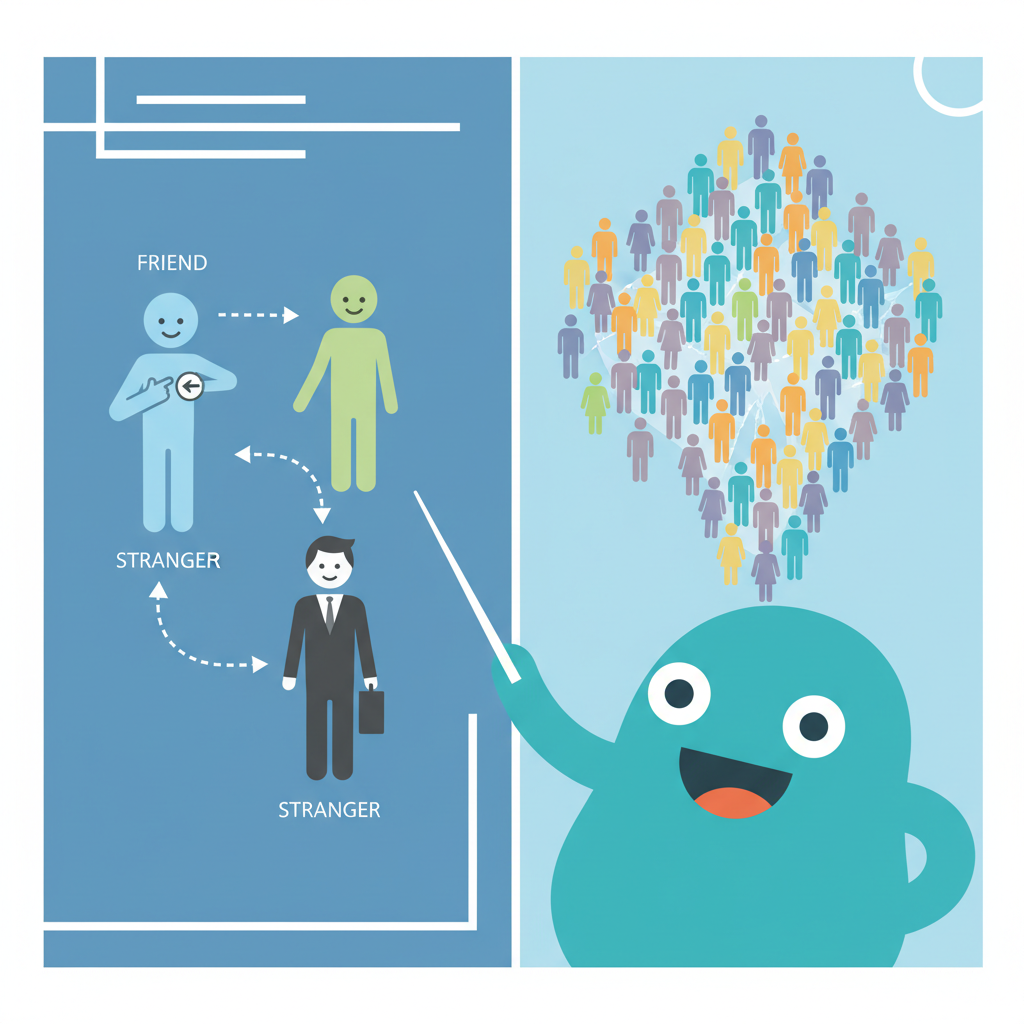
3. The Great "You" Dilemma: du, ihr, and Sie
English uses "you" for everyone: your best friend, a group of children, or the President. German, like many other languages, distinguishes between formal and informal situations, as well as between singular (one person) and plural (multiple people).
du(Informal Singular): Use this when talking to one person you know well. This includes family members, friends, children, and pets.ihr(Informal Plural): Use this when talking to two or more people you know well. Think of it as "you guys" or "y'all".Sie(Formal Singular & Plural): Use this when talking to strangers, authority figures, colleagues you aren't close with, or anyone you would address with "Mr." or "Ms." Notice thatSieis always capitalized, no matter where it appears in a sentence. It works for both one person or a group of formal acquaintances.
Part 2: Introduction to Verbs and Conjugation
Now that we have our actors (the pronouns), we need actions. Words that describe actions or states of being are called verbs.
In dictionaries, verbs appear in their base form, called the infinitive. In English, infinitives usually have "to" in front of them (e.g., to go, to eat, to be). In German, almost all infinitives end in -en or -n (e.g., gehen, essen, sein).
When we use a verb in a sentence, we have to change its shape to match the pronoun. This process is called conjugation. Think of English: We say "I am," "He is," and "They are." We don't say "I be" or "He be." German does the exact same thing, but it changes the verb for almost every pronoun.
Part 3: The Verb sein (to be)
The verb sein (to be) is the most common verb in the German language. It is also highly irregular, meaning it doesn't follow a predictable pattern. You simply have to memorize it.
Conjugation of sein
| Pronoun | Conjugated Verb | English Translation |
|---|---|---|
ich | bin | I am |
du | bist | you are (informal) |
er/sie/es | ist | he/she/it is |
wir | sind | we are |
ihr | seid | you all are (informal) |
sie | sind | they are |
Sie | sind | you are (formal) |
How to Use sein
Just like in English, sein is used to link a subject to a description, an identity, or a location. Here are the primary ways you will use it as a beginner:
1. Names and Identity
You can use sein to introduce yourself or others.
- Ich
binLukas. I am Lukas. - Das
istmeine Mutter. That is my mother. - Wir
sindStudenten. We are students. SindSie Herr Müller? Are you Mr. Müller? (Formal)
2. Adjectives and Feelings
Use sein to describe how someone or something is.
- Der Kaffee
istheiß. The coffee is hot. - Ich
binsehr müde. I am very tired. - Du
bistnett. You are nice. - Das Auto
istschnell. The car is fast.
3. Professions
When talking about professions in German, we use sein, but we drop the article ("a" or "an").
Grammar Tip: In English, you say "I am a teacher." In German, you simply say "I am teacher."
- Ich
binLehrer. I am a teacher. (Male) - Sie
istÄrztin. She is a doctor. (Female) - Wir
sindIngenieure. We are engineers. Bistdu Bäcker? Are you a baker?
4. Expressing Age
Unlike some Romance languages (like Spanish or French) that use the verb "to have" for age, German aligns with English. You "are" your age.
- Ich
binzwanzig Jahre alt. I am twenty years old. - Er
istfünfzehn. He is fifteen. - Wie alt
seidihr? How old are you all?
Part 4: The Verb haben (to have)
The second most important verb in German is haben (to have). It is slightly irregular, but much easier to memorize than sein.
Conjugation of haben
| Pronoun | Conjugated Verb | English Translation |
|---|---|---|
ich | habe | I have |
du | hast | you have (informal) |
er/sie/es | hat | he/she/it has |
wir | haben | we have |
ihr | habt | you all have (informal) |
sie | haben | they have |
Sie | haben | you have (formal) |
(Notice how du and er/sie/es drop the "b" from the stem, becoming hast and hat instead of "habst" and "habt".)
How to Use haben
1. Possession
The most common use of haben is to express ownership.
- Ich
habeeinen Hund. I have a dog. Hastdu ein Auto? Do you have a car?- Sie
hatzwei Katzen. She has two cats. - Wir
habenein großes Haus. We have a big house.
2. Family and Relationships
We use haben to talk about siblings, children, and friends.
- Ich
habeeinen Bruder. I have a brother. Habtihr Kinder? Do you all have children?- Er
hatviele Freunde. He has many friends.
3. Fixed Expressions (Physical States)
This is where German differs significantly from English! In English, we use "to be" for certain physical states (I am hungry, I am thirsty, I am scared).
In German, you possess these feelings. You use haben.
Crucial Rule: In German, you literally say "I have hunger," "I have thirst," and "I have fear."
- Ich
habeHunger. (NOT: Ich bin hungrig) I am hungry. (Literally: I have hunger) Hastdu Durst? Are you thirsty? (Literally: Have you thirst?)- Wir
habenZeit. We have time. - Sie
hatAngst. She is afraid. (Literally: She has fear)
Common Mistakes to Avoid
As a beginner, there are a few traps that are very easy to fall into. Keep an eye out for these!
1. The Three "Sie"s
Look back at the pronoun chart. The word sie appears three times!
sie(lowercase) means she.sie(lowercase) means they.Sie(capitalized) means formal you.
How do you tell them apart? Look at the verb conjugation and the context!
sie ist= she is (singular verb)sie sind= they are (plural verb)Sie sind= you are (plural verb, butSieis capitalized in the middle of a sentence)
2. Confusing ihr (you all) and er (he)
Because ihr and er sound somewhat similar to English speakers, and because they often take similar verb endings later on, beginners mix them up. Remember: er is one man (he). ihr is a group of friends (you all/y'all).
3. Using haben for Age
If you speak French, Spanish, or Italian, your brain will desperately want to say Ich habe 20 Jahre (I have 20 years). Resist the urge! In German, age uses sein: Ich bin 20 Jahre alt.
4. Using sein for Hunger/Thirst
As mentioned above, English speakers naturally want to say Ich bin Hunger (I am hunger). This sounds very dramatic in German! Remember to use haben: Ich habe Hunger.
Practice Tips
Grammar is a muscle, and the only way to make it stronger is through repetition. Here is how you can master pronouns, sein, and haben:
- Create a Cheat Sheet: Write out the conjugation tables for
seinandhabenon a sticky note. Put it on your computer monitor or bathroom mirror. Look at it every day. - Narrate Your Life: As you walk around your house, point to things and form simple sentences in your head. Das ist ein Buch. Ich habe ein Buch. Der Kaffee ist heiß. Ich habe Durst.
- Roleplay the "You"s: Imagine talking to different people. Imagine your best friend (
du), a group of friends (ihr), and a police officer (Sie). Practice asking them "How are you?" or "Do you have time?" - Practice with Hamzaban: The best way to solidify these rules is to use them in conversation. Jump into the Hamzaban app and practice introducing yourself with Hamzaban's AI tutor. The AI is incredibly patient and will gently correct you if you mix up
seinandhaben!
Learning a language takes time, and you've just taken the biggest first step. Master these pronouns and these two verbs, and you will have unlocked the foundation of the German language. Here at Hamzaban, we are excited to guide you on the rest of your journey. Viel Glück! (Good luck!)